You will collect your work results, notes, thoughts and sketches in your own portfolio.
But what is a „portfolio“ anyway?
It is a collection of documents, sketches, notes, diagrams, … there are similarities to an „artist’s portfolio“ or a „sketchbook“.
Two features of the portfolio are particularly important for you:
- The portfolio documents your process – it should therefore contain corrected mistakes in the processing of some tasks as well as ideas for the installation that were available for selection but you did not decide on.
IMPORTANT: Errors are bound to occur when working on the tasks for the stations. Your task is to correct yourself VISIBLY in the portfolio after the review in class using the sample solution. Describe next to your marked error what exactly you misunderstood. This way, when you look through your portfolio, you can effectively see everything you are able to understand now, even though you had difficulties before. This is how learning works – from mistakes. And that is why there is specific space for these in the portfolio.
Remember, you will not be graded on how many mistakes you made, but on HOW you corrected them.
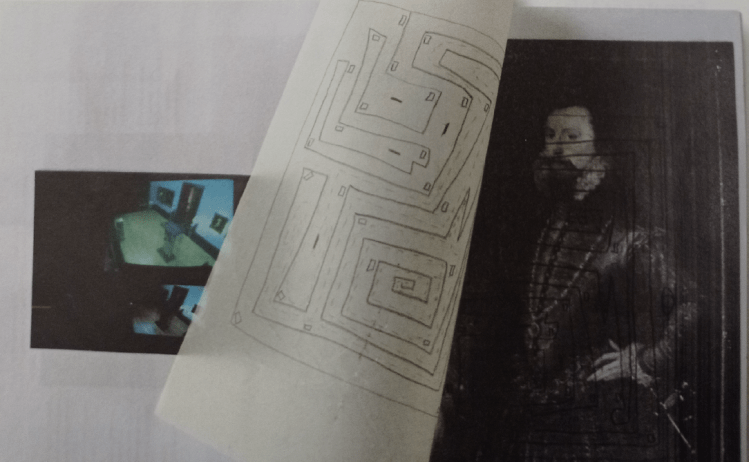
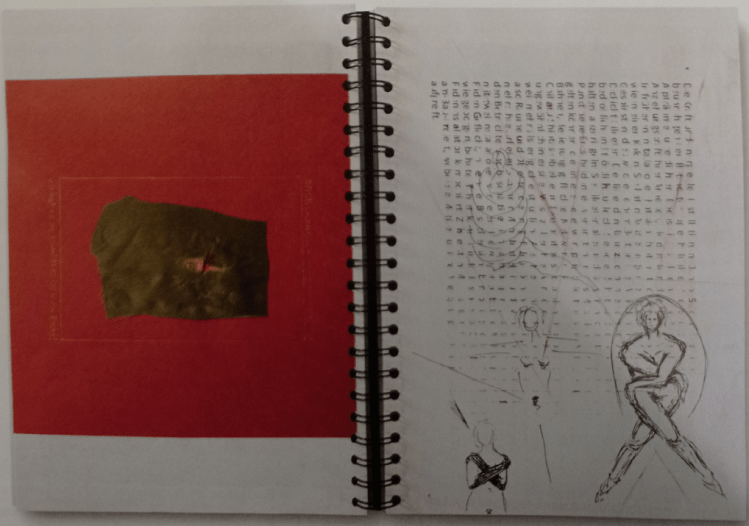
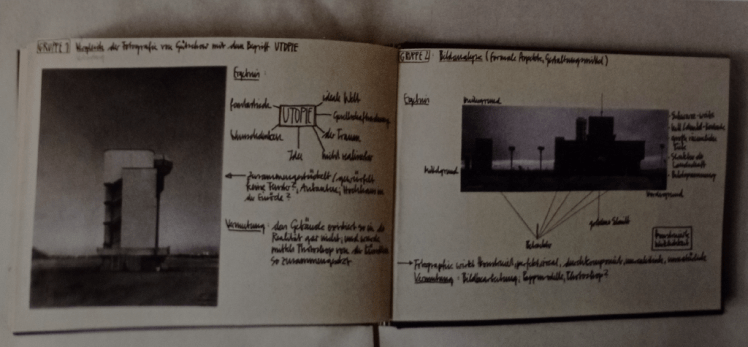
2. The design of the portfolio is up to you. You can decide which colors and folder you want to use or how many sketches shall be incorperated in your portfolio. There is an outline of the content blocks that must be present in any case, but the design of those is up to you. Here is a small slideshow of different pages from different portfolios for inspiration:
(All examples from: Burkhardt, Sara (2014): Portfolios im Kunstunterricht. Arbeitsprozesse dokumentieren und reflektieren. In: Kunst und Unterricht (379), p. 4–13.)
Now to the structure of the portfolio
important, obligatory components of the portfolio are:
- Cover Page (design a meaningful, creative cover page that presents the portfolio topic in an interesting way. In terms of content, you must note on the cover sheet: Title, year of creation, your name, your class, the names of your group members).
- Table of contents (In the table of contents you give a structured overview of the contents of your portfolio. Think about the names of the chapters and the corresponding page numbers. Here is an example for the table of contents (the page numbers should of course be continued, here are only two examples):
3. The documentation of your results of the tasks of the three stations
Collect all notes and scetches regarding the tasks from the station learning.
4. Documentation of your design assignment
Each of you will create this individually, your documentation in the group may differ from each other.
The documentation includes sketches and notes on various ideas, as well as reasons why you chose which ones. For this, you can also refer to photos of finished artwork that you have found online. Then you have to document, with photos if necessary, how you built the installation and where there may have been difficulties.
The conclusion of the chapter on your design assignment is a reasoned selection of photos of the finished installation and the design of the „exhibition materials“. These are now the same for all group members since you are creating them together. Nevertheless, they form a part of each individual portfolio. You can find more on the design of the „exhibition materials“ here:
5. Reflection
For the reflection, once you are done with the previous components , you have to write about your experience . Use the following questions to do this:
6. Bibliography
Everywhere you have inserted texts or illustrations from the Internet or from books, you have to make it visible to readers. Therefore, you should number all these places with small numbers (1,2,3,4,…), which you then list in the bibliography and write a source reference to each small number. This describes where exactly this text or this illustration comes from.
References in the bibliography
A complete citation of sources in the bibliography contains specific information.
books:
- Author
- Title
- Year of publication
- Place of publication
- Edition
- Publisher
Internet sources:
- URL (link)
- Date of download (when did you download the image)
- If visible: author or photographer, year of publication
 Lights on!