
Physics and art – teaching them together?!

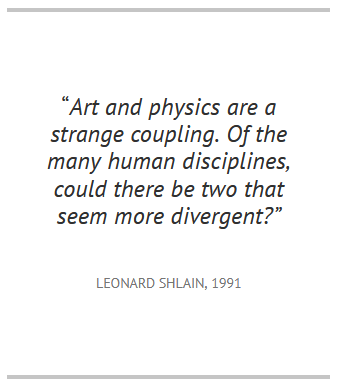


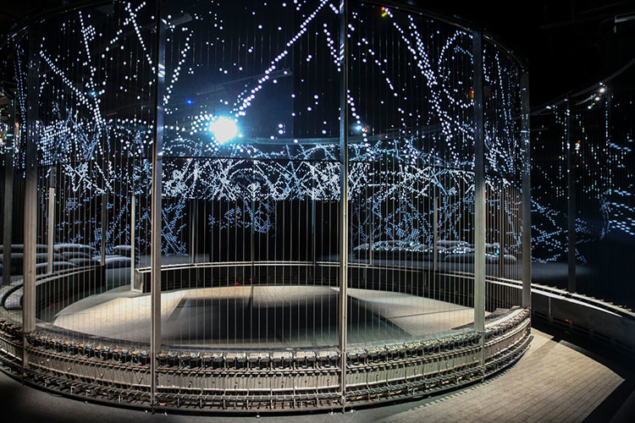
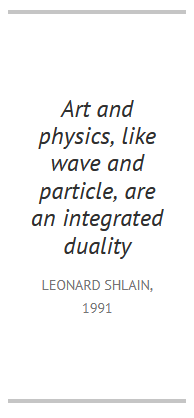
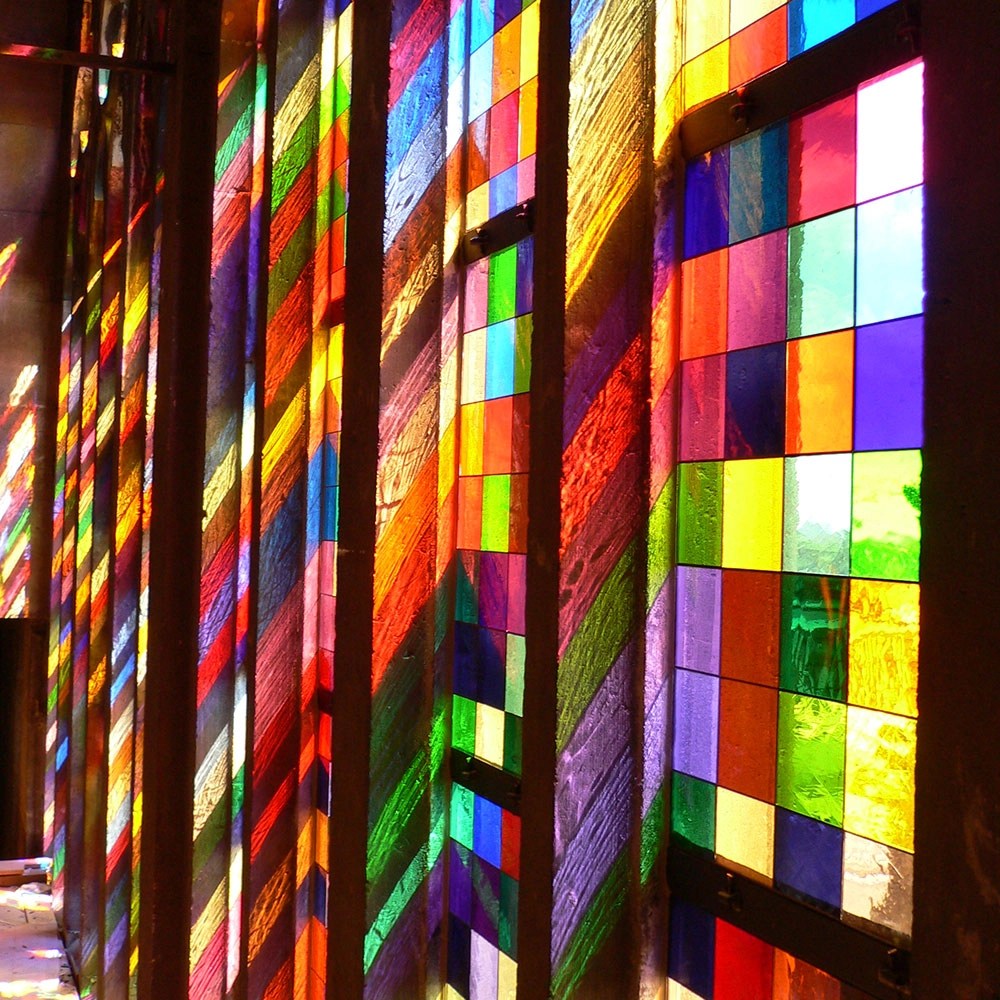
Art and physics – the relationship between the two disciplines could hardly be more contradictory. Artists and physicists approach the exploration of reality in very different ways. Physicists look for regularities and patterns, transfer them into mathematical descriptions, sort and structure the world around us. Artists are concerned with describing a reality that goes beyond what we see outside ourselves, finding forms new of expression and representation for elements of reality for which there are yet to be words. Both disciplines strive to explore the unknown and describe „unfamiliar images“ – each in its own unique way, yet together. For example, there are some works of art that take physical principles as their model, and especially in the communication and presentation of scientific content, principles of artistic aesthetics are often used as a guide – as in the examples shown above [1] .
Why not at school?
Wouldn’t it be an interesting idea to bring a combination of subjects possible into the classroom? This is the subject of this website, which collects and presents ideas for interdisciplinary teaching between physics and art, in the form of a series of lessons on optics and light art for the end of lower secondary school.
The teaching series
Within the framework of the series of lessons, the learners design a light installation that foregrounds one of the three optical effects dealt with (reflection, refraction and light colours) and achieves an exciting artistic expression using this effect. The learners describe their ideas and their procedure for this creative, artistic work, as well as the optical effects, which they learn about intensively in the form of station learning before designing the installation, in the context of a portfolio accompanying the series. Examplary results of the series of lessons can be found in the digital exhibition on this website. The exhibition can be accessed here:
Navigating the website
The station learnings can be started by choosing one station learning directly via the main menu bar under „Home“ in the dropdown menu. The stations are „mirrors“, „colours“ and „spectrum of light“. Therefore, the station learnings are available in class as well as anywhere else. They contain all tasks and also the respective design task for a light installation. In addition, there are help pages for the portfolio as an accompanying tool for the series of lessons and for the design of the exhibition material for the light installation as the final product.
For teachers, there is further information on the structure and scope of the station learning, templates for performance assessment and other downlaods by clicking on „For teachers“ in the dropdown menu under „Home“ in the main menu bar.
[1]Sources of featured pictures:
The following links lead to further information on the examples shown above:
https://www.technischesmuseum.at/event/hochspannungsvorfuehrung?No=00088687&Event_No=172
https://design-milk.com/prismverse-an-installation-of-geometrical-tessellated-mirror-walls/
https://arnaud-lapierre.com/post/76950493945/ring-2012-mirrored-cubes-installation-fia
https://www.ruhr-guide.de/kultur/museen-im-revier/zeiss-planetarium-bochum/18163,0,0.html
https://cerncourier.com/a/creativity-across-cultures/
https://www.derix.com/portfolio-items/richterfenster-koelner-dom/
 Lights on!